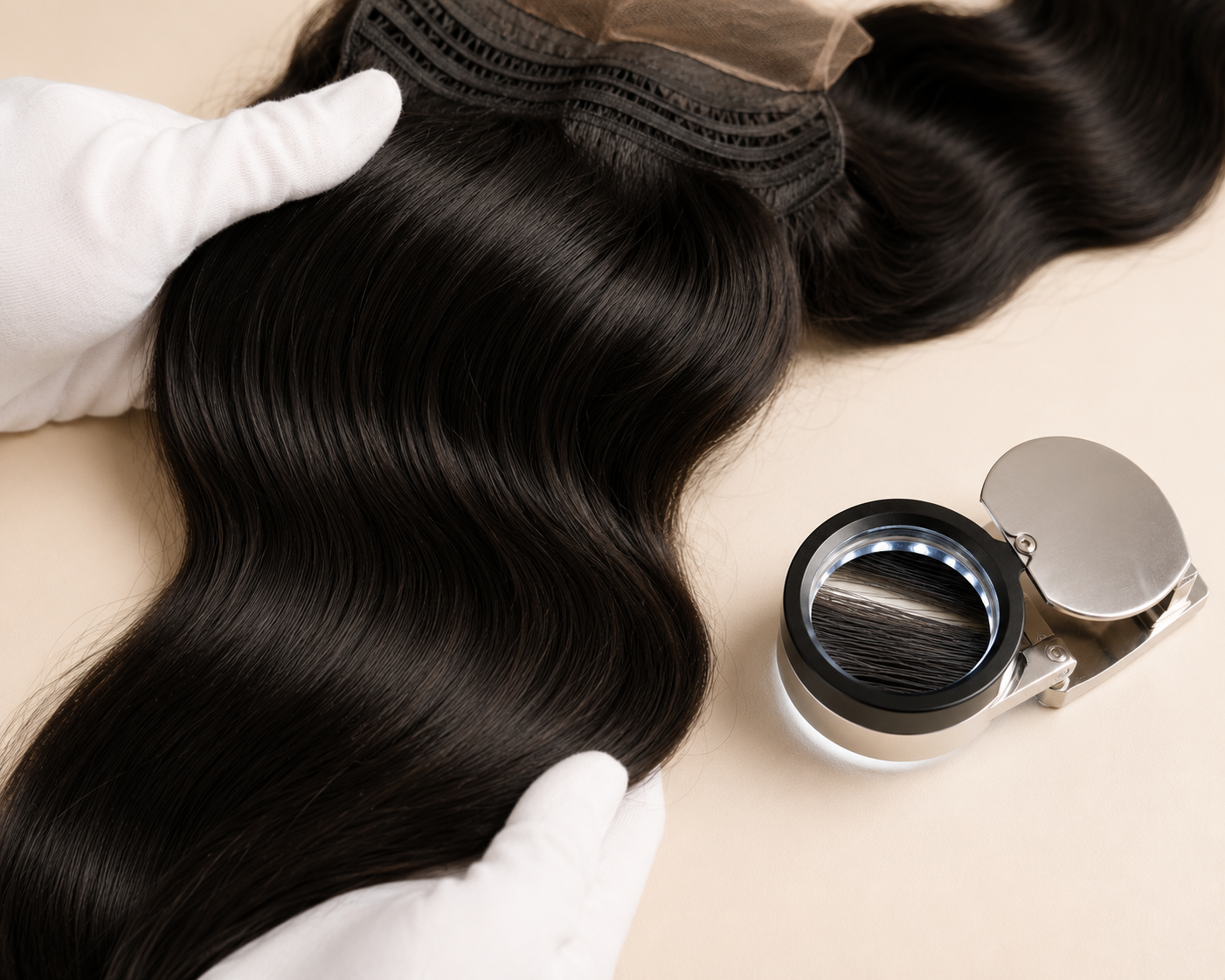
AA WIGS Body Wave — cuticle-aligned virgin hair that moves as a unit, reducing tangle risk.
Why Human Hair Wigs Tangle
Your own hair tangled, too — before you owned a wig. The difference is that your scalp continuously produces oils that lubricate and coat the hair shaft, and your hair grows from a live follicle that maintains the cuticle at its original alignment. A wig has neither of these built-in systems.
Without scalp oils, the hair on a wig is dryer than living hair. Without a follicle maintaining cuticle integrity, the outer layer of the hair shaft roughens with wear. Dry, rough hair grabs onto adjacent hair — and that is a tangle.
This is why tangling is universal across all human hair wigs, and why the relevant question is not "will it tangle" but "how fast, and how severely." The answers to those questions depend on cuticle alignment, moisture maintenance, and handling.
The Cuticle Factor
The cuticle is the outermost layer of the hair shaft — a series of overlapping scales running from root to tip, like shingles on a roof. When cuticles on adjacent hairs all run in the same direction, they slide past each other. When they run in different directions, the scales interlock — and a tangle forms.
This is why virgin human hair, where all strands were cut from a single donor and kept in their original cuticle direction, tangles significantly less than collected hair, where strands from multiple sources are bundled together with mismatched cuticle directions.
Wigs made from acid-washed or silicone-coated hair feel soft and tangle-free at first because the silicone coating smooths the surface. After a few washes, the coating rinses away and the hair — which has no cuticle remaining to protect it — tangles severely and continuously. This is one of the most common bait-and-switch experiences in the wig market.
Why the Nape Tangles Most
Without exception, the nape of the wig is the first area to tangle in every human hair wig worn regularly. This is not a quality problem — it is a friction problem.
The nape sits at the point of maximum contact with external surfaces: your collar, your seat back, your pillow, your scarf or bag strap. Hair at the nape experiences more compression, more rubbing, and more movement against external materials than any other section. The result is predictable: the cuticles at the nape rough up faster, and the hair there mats and tangles before the rest of the wig shows any sign of it.
AA WIGS Tip: When sitting for long periods — at a desk, in a car, watching a film — loosely braid or pin back the nape section. This single habit extends tangle-free wear dramatically and reduces the nape matting that most wearers assume is inevitable.
Moisture, Dryness, and Tangle Risk
Dry hair tangles. This is not complicated, but it is consistently underestimated.
Human hair on a wig has no moisture source once it leaves your head. Environmental factors — central heating, air conditioning, low-humidity climates, excessive heat styling — all draw moisture from the hair shaft and roughen the cuticle. The rougher the cuticle surface, the faster hair interlocks with adjacent strands.
Maintaining moisture is the single most effective preventative measure for tangling. This means:
- A light application of leave-in conditioner or hair oil after every wash
- A light mist of water mixed with conditioner before styling on non-wash days
- Avoiding heat styling without a heat protectant that coats and seals the cuticle
- Storing the wig on a stand away from heating vents, direct sunlight, and dry air
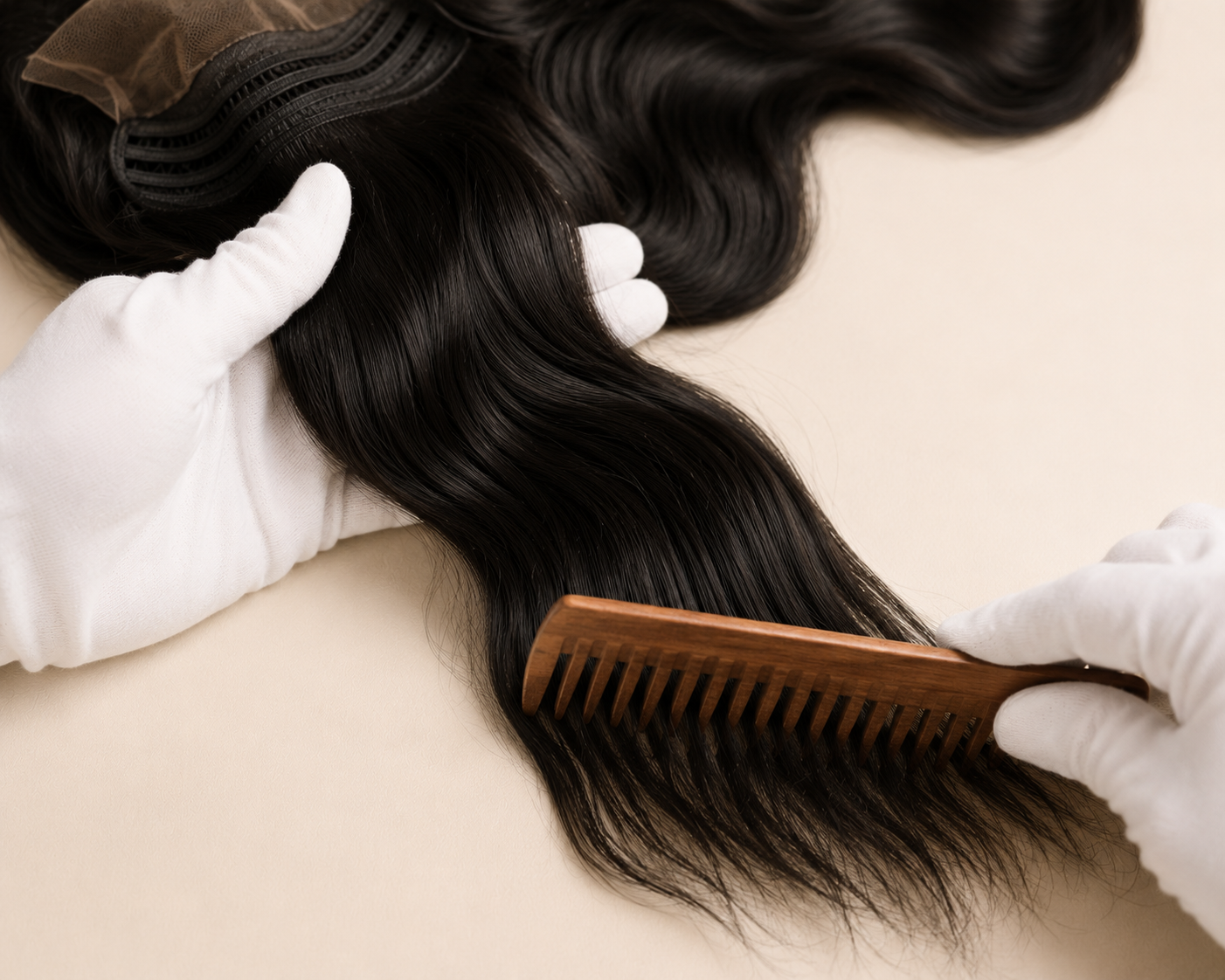
Detangling starting from the ends — the correct technique that prevents breakage and shedding.
Handling Habits That Cause Tangling
The most common tangling accelerators are all handling-related and all avoidable:
- Sleeping in the wig without protection — 6–8 hours of pillow friction against the hair is the fastest way to create nape matting. If you sleep in your wig, wear a silk or satin scarf over it.
- Storing flat in a plastic bag — the hair compresses and shifts, and the resulting tangled mass is significantly harder to detangle cleanly without breakage.
- Washing with circular or rubbing motions — this physically scrambles the cuticle direction and creates immediate tangle risk on the next wear.
- Not detangling before washing — putting a tangled wig into water sets the tangle. Always detangle dry before washing.
- Using a fine-tooth brush from the root — this drags all tangles toward the tips and creates compounding knots rather than releasing them.
How to Detangle Correctly
The correct detangling sequence is the same regardless of how tangled the wig is:
- Place the wig on a stand — never try to detangle a wig while wearing it
- Apply a small amount of detangling spray or diluted leave-in conditioner to the tangled area
- Use your fingers first to separate the largest knots before any tool touches the hair
- Take the smallest section you can isolate at the very tip of the hair
- Work through the tip completely before moving 2–3 centimeters up the shaft
- Continue upward in small increments until the full length is clear
- Only then use a wide-tooth comb from ends to root to smooth the section
AA WIGS Tip: Never detangle under running water. Wet hair under water tension is at maximum elasticity — it stretches rather than releases, and tangles under those conditions cause breakage rather than resolving the knot.
How to Prevent Tangling
- Braid or loosely pin the nape when sitting for long periods or resting
- Wear a satin or silk scarf over the wig if sleeping in it — or remove it and store on a stand
- Apply leave-in conditioner after every wash and a light oil mist between washes
- Detangle before washing, not after, and always end-to-root
- Use a wide-tooth comb or fingers only — fine-tooth brushes create more friction than they resolve
- Store on a wig stand, not compressed in a bag or drawer
- Use a heat protectant every time you apply heat — heat styling without protection strips moisture and roughens the cuticle surface
Frequently Asked Questions
Why does my wig always tangle at the nape?
The nape is the highest-friction area — it contacts your collar, seat back, pillow, and bag straps throughout the day. More friction means the cuticle roughens faster there than anywhere else. Loosely braiding or pinning the nape section during long sitting periods removes the friction source and dramatically reduces nape matting.
Is tangling a sign of poor quality?
Normal friction-based tangling is not a quality indicator — it happens to every human hair wig. Rapid tangling after washing, or severe matting that cannot be detangled without breakage, can indicate misaligned cuticles from collected or acid-washed hair — which is a sourcing and quality issue. Virgin human hair with aligned cuticles tangles far less severely than processed or collected hair.
How do I detangle a badly knotted wig?
Place the wig on a stand. Apply detangling spray or diluted leave-in conditioner to the knotted section. Use your fingers to separate the largest tangles first. Then start at the very tip and work upward in tiny increments — never pull through from above the knot. Never detangle under running water, which sets tangles under tension.
Why does my wig tangle after washing?
Post-wash tangling is caused by washing against the cuticle direction, insufficient conditioner, or handling wet hair aggressively. Always squeeze product through the hair downward. Apply conditioner generously and leave it 3–5 minutes. Detangle gently with fingers while conditioner is still in — never after rinsing with dry hair.
Related Articles
- Why Does My Wig Shed? Causes, Limits, and How to Stop It
- How To Refresh Your Body Wave Between Washes
- The Cuticle Is Everything: What Virgin Human Hair Actually Preserves
- Heat Styling Guide for Body Wave Wigs
- Is This Normal? — diagnostic thresholds for shedding, tangling, and more
- Buying With Confidence — the complete AA WIGS trust hub →
- Browse All Knowledge Center Articles →
Tangling is manageable when you understand its causes. To understand what the AA WIGS Signature piece is built from at the sourcing level — and why cuticle-aligned virgin hair makes a measurable difference — read The Cuticle Is Everything.
For personalized care guidance, the AA WIGS Concierge is available to help.