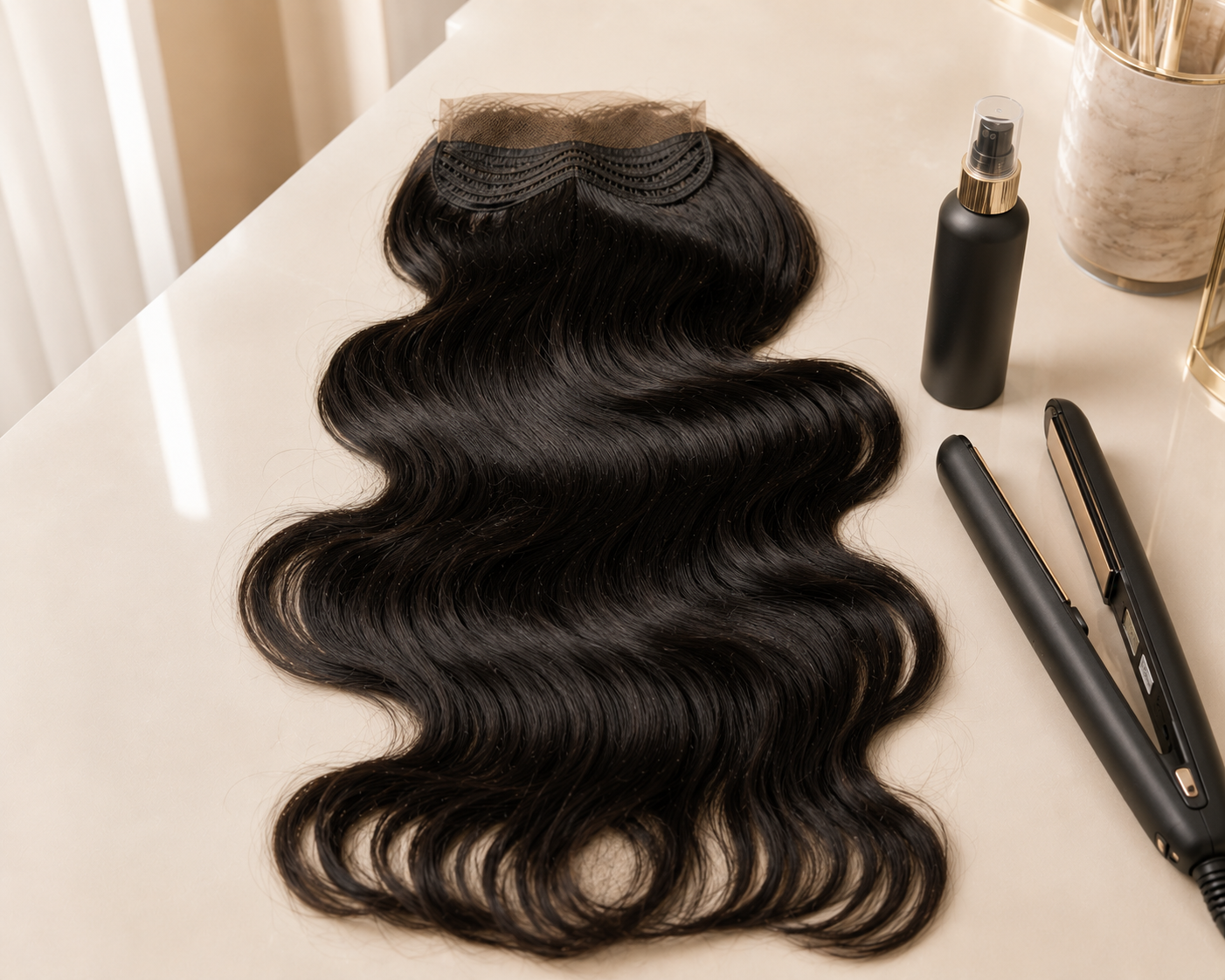
AA WIGS Body Wave — before and after heat styling, showing the wave's versatility.
Can You Use Heat on a Human Hair Wig?
Yes — and this is one of the defining advantages of a virgin human hair wig over a synthetic one. Synthetic wigs cannot withstand direct heat and will melt or permanently frizz at styling temperatures. Human hair behaves like the hair on your head: it responds to heat tools, holds the shape you give it, and can be restyled.
The important distinction is that a wig does not have a scalp producing protective oils, and the hair has already been through some level of processing. This means the hair is more vulnerable to heat damage than freshly grown living hair — it requires correct temperatures, correct protection, and correct technique to stay in excellent condition over time.
Safe Temperature Range
The safe heat range for a virgin human hair body wave wig is 300–350°F (150–175°C). This range is effective for styling and well below the threshold where the cuticle begins to permanently degrade.
The most common mistake is setting the iron higher because "it styles faster." Higher temperature does not produce a better result on human hair — it produces a faster result with compounding damage. Work in sections at a controlled temperature rather than rushing with excessive heat.
Why Heat Protectant Is Non-Negotiable
A heat protectant is not optional. It is the barrier between the styling tool and the hair cuticle. Without it, the iron contacts the dry hair shaft directly, extracts moisture rapidly, and begins degrading the cuticle at temperatures that would otherwise be completely safe.
Apply a light, even mist of heat protectant spray to each section before the iron touches it. Do not over-saturate — wet hair should not be ironed. The goal is a fine coat that protects without adding so much product that you are essentially steaming the hair rather than styling it.
AA WIGS Tip: Choose a heat protectant that lists a protection threshold of at least 450°F on the label. This is not because you will style at 450°F — it means the product has sufficient thermal barrier to be effective at 350°F without burning off immediately on contact.
Flat Ironing a Body Wave Wig
Flat ironing will straighten the sections you apply it to. The body wave pattern in those sections will not automatically return — the heat restructures the hair temporarily into its new shape. This is not damage; it is how heat styling works on human hair. The wave can be restored (see below), but repeated flat ironing over the same sections will gradually reduce wave definition over time.
- Place the wig on a stand and detangle thoroughly before applying any heat
- Set your flat iron to 300–350°F and allow it to fully reach temperature
- Apply heat protectant to a 1-inch section of hair — never wider
- Clamp the iron at the root area (not on the lace or weft) and glide smoothly downward in one motion — do not pause
- Never clamp and hold the iron stationary on the hair
- Release, allow the section to cool, and move to the next
- Do not run a comb or brush through the section until it is completely cool
AA WIGS Tip: Do not flat iron directly over or near the lace or weft stitching at the hairline. The lace is thin and heat-sensitive. Begin the iron 1–2 centimeters below the weft to protect both the lace and the cap stitching.
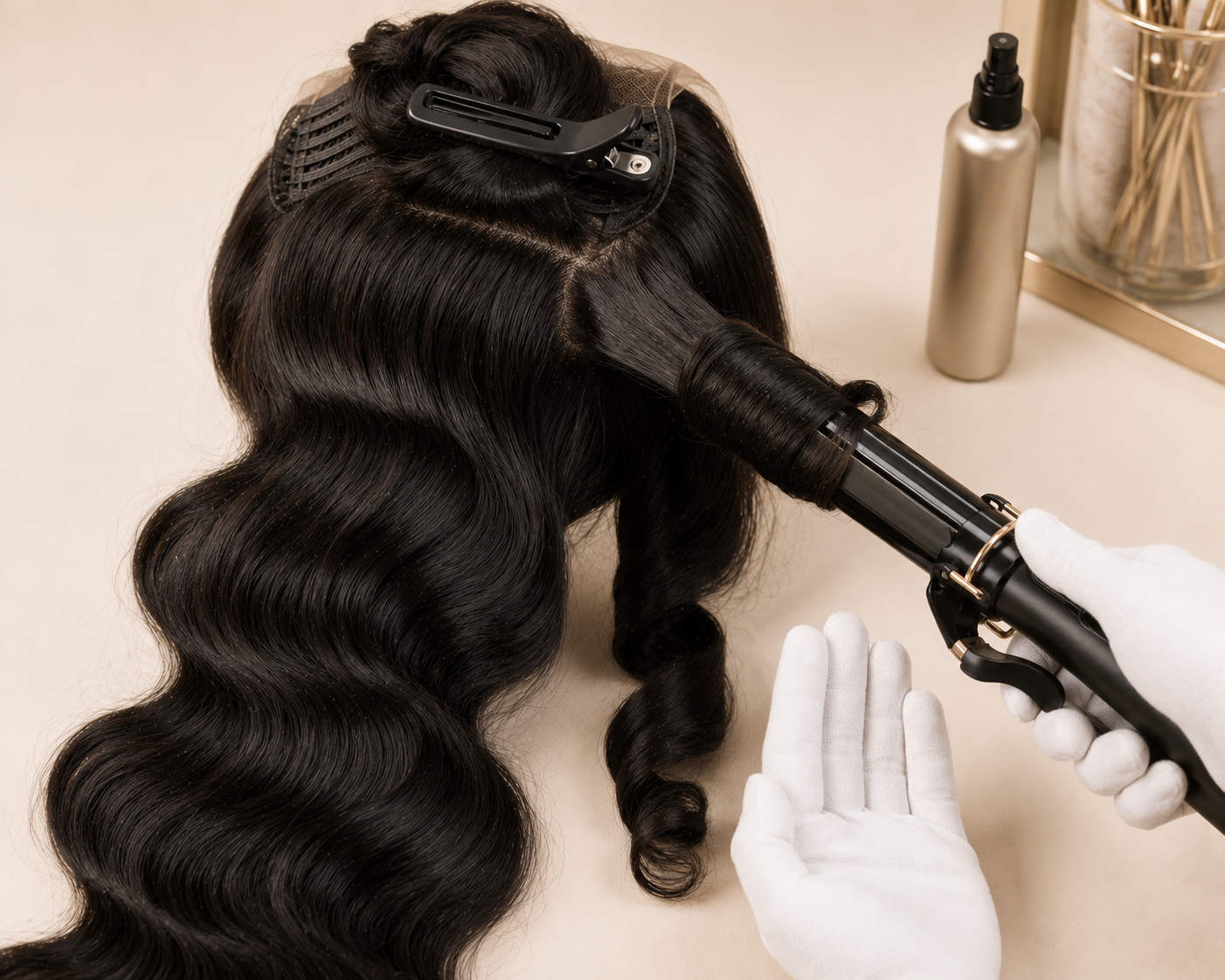
Curling technique — 1-inch sections, 300°F, 8–10 seconds, release and cool before touching.
Curling and Restyling
A curling iron or wand creates defined curls that complement or enhance the natural body wave pattern. The technique:
- Set the curling iron to 300–350°F
- Apply heat protectant to each section before curling
- Work with sections no wider than 1 inch for defined results
- Hold the iron on the section for 8–10 seconds — no longer
- Release the curl and allow it to cool completely before handling — touching a hot curl collapses it immediately
- Once cool, gently separate curls with your fingers, not a comb
Flexirod sets and perm rods are an excellent heat-free alternative for enhancing the body wave pattern without any temperature risk. Apply to damp hair, allow to fully dry, and release for defined waves that preserve the cuticle entirely.
Restoring the Body Wave After Heat
If you have flat ironed sections and want the wave pattern back, the process is straightforward:
- Wash the wig with a sulfate-free shampoo, squeezing downward
- Apply a generous amount of conditioner and work it through the hair with your fingers — this begins re-activating the wave
- Rinse and apply a leave-in conditioner or curl-activating cream
- Place the wig on a stand and allow it to air dry completely without touching or brushing
- The natural wave pattern will restore across most sections as the hair dries
Note: sections that have been flat ironed repeatedly over many wears may show reduced wave definition. This is cumulative heat history in the hair, not a product failure. It is why heat protectant and moderate temperatures compound their value over the life of the wig.
What Actually Damages the Wig
Heat damage to a human hair wig is usually not from one incident — it is from accumulated bad habits:
- Skipping heat protectant — even once — leaves the cuticle unprotected and extracts moisture that shortens the hair's lifespan
- Setting the iron above 380°F — anything above this threshold causes irreversible cuticle degradation that manifests as permanent frizz and increased shedding
- Pausing the iron on the hair — a stationary iron concentrates heat at one point and scorches the shaft
- Styling wet hair — water in the hair shaft turns to steam at styling temperatures, expanding rapidly and rupturing the hair from inside
- Using heat daily — even at correct temperatures, daily heat application accumulates damage. Style with heat 1–2 times per week maximum and allow the wig to rest on its stand with no heat on off days
- Using a blow dryer on maximum heat — direct high-heat airflow concentrated in one spot is as damaging as an iron set too high. Use low-to-medium heat on the dryer, or use a diffuser attachment
Frequently Asked Questions
Can you flat iron a body wave wig?
Yes. At 300–350°F with a heat protectant applied, flat ironing is safe and effective. The wave will straighten in the sections you iron. To restore the wave, wash, condition, and air dry without tension.
What temperature should I use to style a human hair wig?
300–350°F (150–175°C) is the recommended range for body wave wigs. Do not exceed 380°F. Temperatures above 400°F permanently damage the cuticle and cannot be reversed. Always use a heat protectant before any heat tool contact.
Will heat styling ruin my body wave pattern?
Flat ironing straightens the sections you apply it to — the wave does not auto-revert. However, washing and air drying restores the wave to most sections. Repeated heat over the same sections gradually reduces wave definition over time, which is why moderate temperatures and heat protectant preserve the pattern over the life of the wig.
Can I use a curling iron on a body wave wig?
Yes. At 300–350°F, a curling iron creates defined curls that complement the body wave texture beautifully. Use 1-inch sections, hold 8–10 seconds, release, and allow each curl to cool fully before touching. Apply heat protectant to every section before the iron makes contact.
Related Articles
- How To Refresh Your Body Wave Between Washes
- Why Does My Wig Tangle? Causes and How to Prevent It
- Why Does My Wig Shed? Causes, Limits, and How to Stop It
- The Cuticle Is Everything: What Virgin Human Hair Actually Preserves
- Is This Normal? — diagnostic guide for every common concern
- Buying With Confidence — the complete AA WIGS trust hub →
- Browse All Knowledge Center Articles →
Heat styling is one of the most requested topics from wig wearers, and one of the most poorly documented. If you have specific questions about styling your AA WIGS piece or want guidance on tools and products, the AA WIGS Concierge is available to help directly.