You found the wig. The product page looked professional. The model photos were beautiful. The hair appeared full, glossy, and perfectly installed. You read the description — 100% human hair, HD lace, premium quality — and you ordered.
Then the package arrived.
A crumpled gray poly mailer. A shipping label. No brand name visible. Inside, the wig compressed into a clear plastic bag — hair already loosening at the top, lace folded against itself, wave pattern compressed from transit.
If you have bought a wig online before, you have probably been here. And you probably felt that specific kind of disappointment that comes not from a broken product — but from the gap between what was promised and what arrived.
This article is about that gap. What causes it. Why it matters more than most buyers realise. And what a different standard looks like.
The Gray Poly Mailer
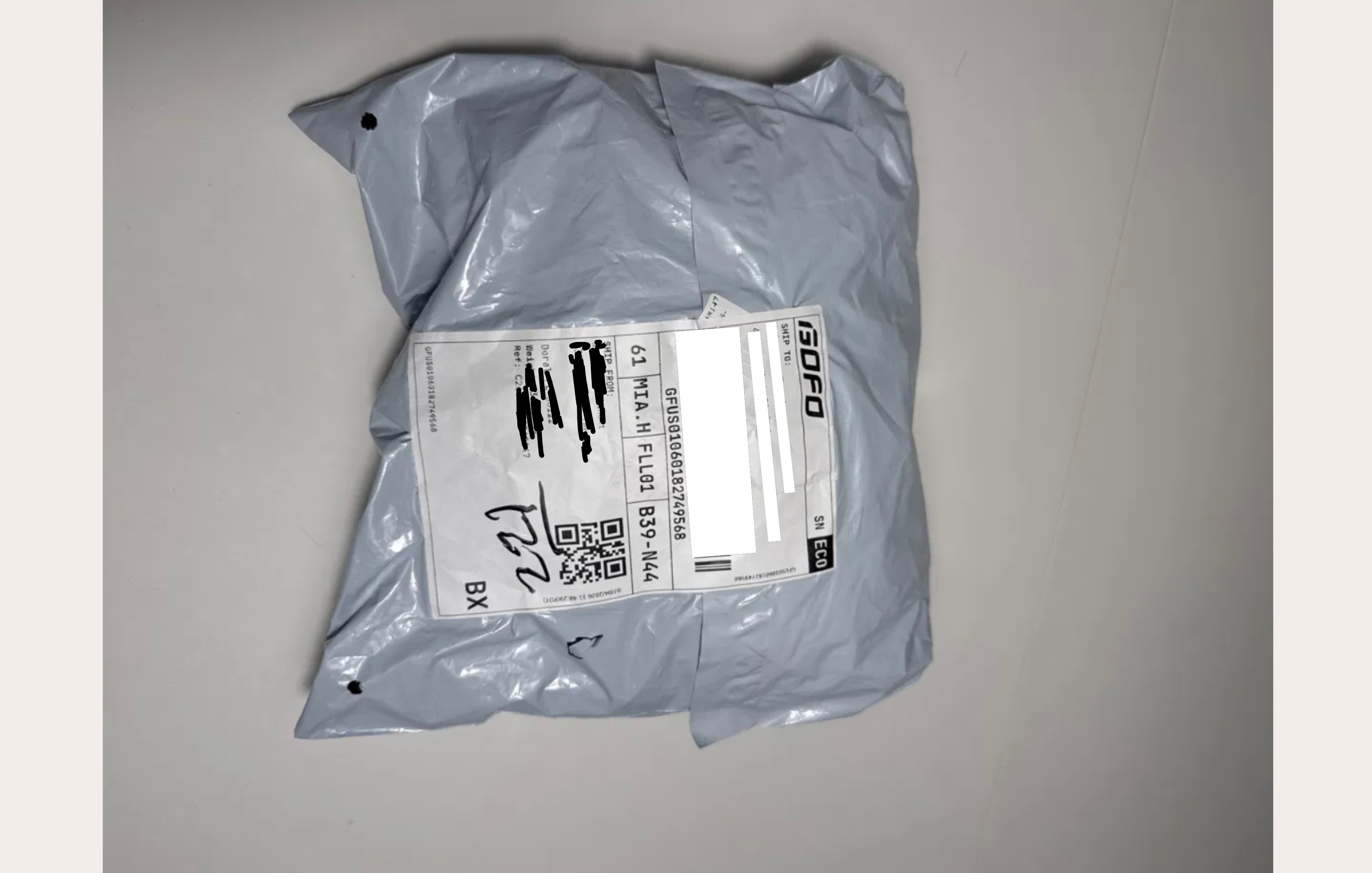
A gray poly mailer with generic carrier label — the default shipping vessel of the online wig industry.
The poly mailer has become the default shipping vessel of the online wig industry. It costs pennies per unit. It ships light. It seals quickly. For a brand moving high volume at low margin, it is the logical choice.
But logic and luxury are not the same thing.
The moment a client receives a gray poly mailer, a message has already been delivered — before the wig is even touched. That message is: this product is a commodity. It is no different from a fast fashion order, a phone case, a pair of socks from a warehouse.
The brand spent money acquiring that client. They spent money on product photography. They may have spent money on advertising. And then, at the most important moment — the moment the client physically encounters the brand for the first time — they handed her a gray bag with a barcode.
"The packaging is not secondary to the product. It is the first physical sentence the brand speaks to its client."
That approach prioritises shipping efficiency over the unboxing experience.
The Clear Plastic Bag
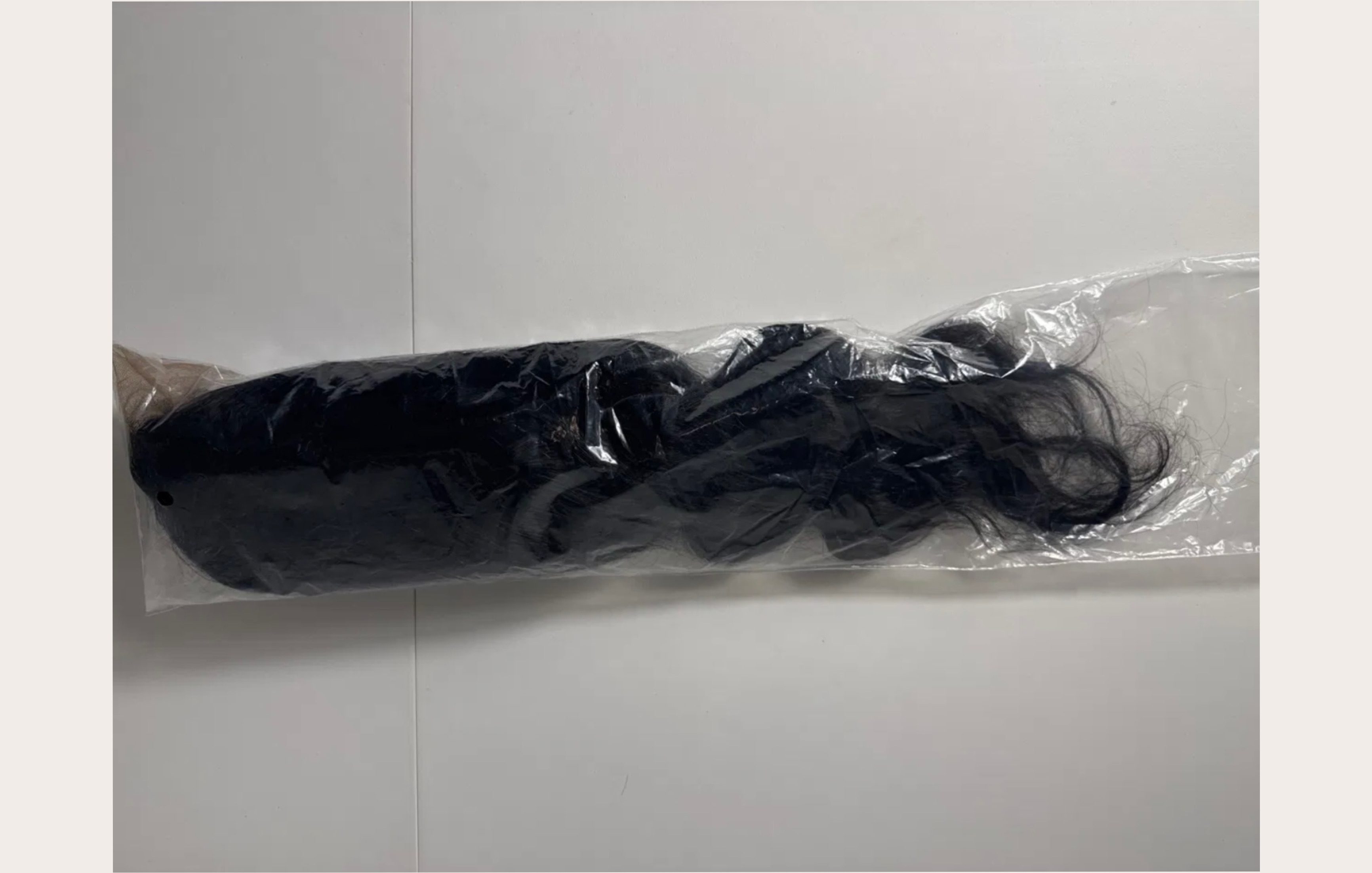
Hair already escaping the bag before it has been opened. The lace frontal folded against itself during transit.
Inside the poly mailer, the wig arrives in a clear plastic bag. Rolled or folded. Compressed by whatever shape the mailer took during transit. The hair is already escaping from the top of the bag before it has even been opened.
This matters for several specific reasons that go beyond aesthetics.
The lace. A 13×6 lace frontal is one of the most delicate components of any wig. It is designed to be nearly film-thin — that thinness is what creates the undetectable hairline. Folding it against itself during shipping creates creases. Those creases can be permanent, or they can take significant effort to remove before installation. A wig that arrives with a creased lace frontal requires work before it can be worn — and a first-time buyer may not know how to address it.
The wave pattern. Body wave texture is a heat-set pattern applied during production. Compression during shipping flattens and distorts that pattern. The wave that appeared full and defined in the product photos will not be the wave that emerges from a compressed plastic bag. It can be refreshed — but that requires knowledge, time, and the right technique. Most buyers who receive a compressed wig simply think the product is different from what was advertised.
The hair at the opening. When hair escapes the bag during transit, strands are catching, tangling, and experiencing friction against the plastic. This is preventable with proper internal packaging. It is not prevented because proper internal packaging costs more and takes longer to prepare.
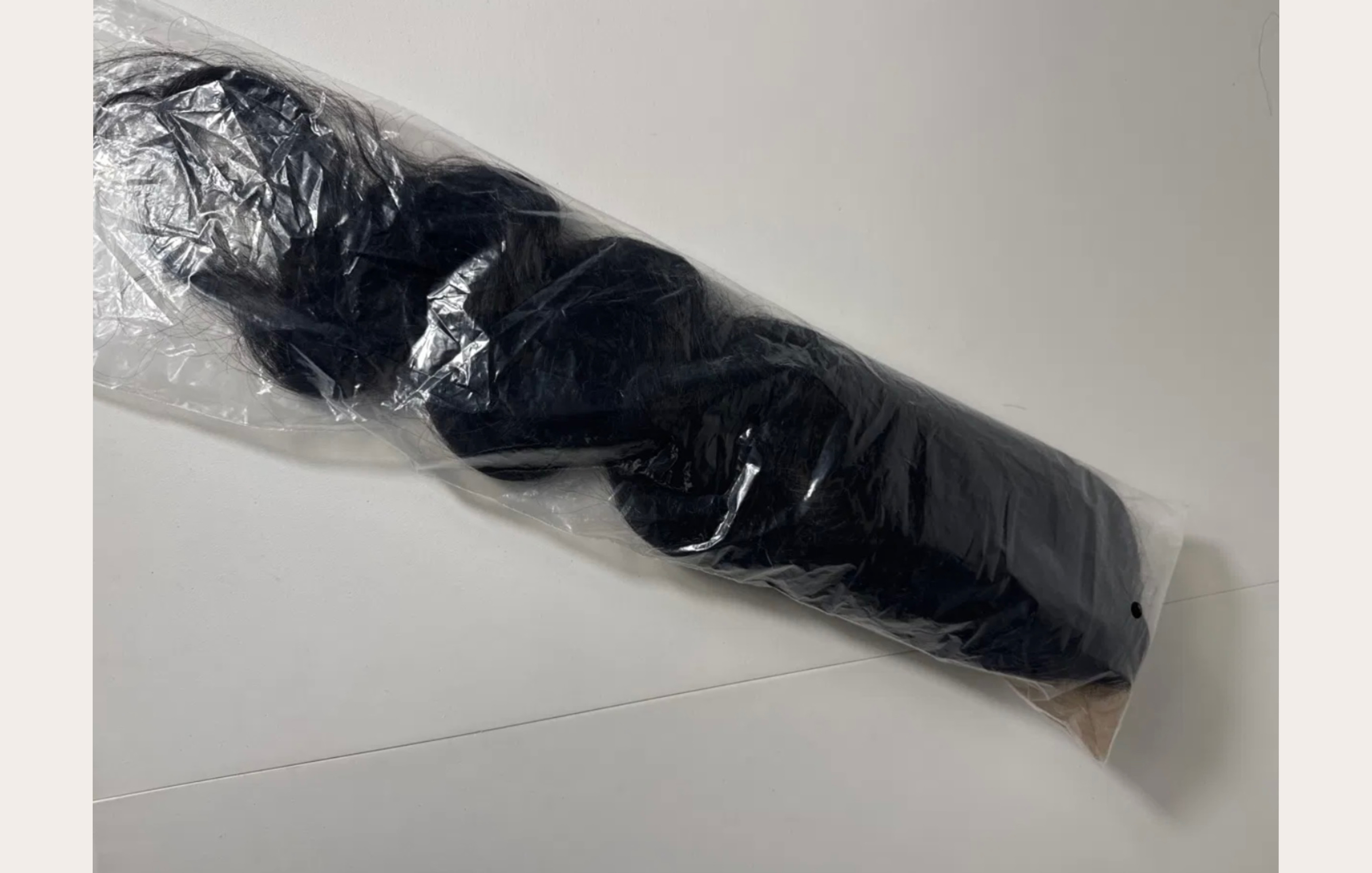
Wave pattern compressed and distorted by rolling inside a generic plastic bag. The curl definition visible in product photos will not match what emerges from this.
Why Brands Ship This Way
This is not a story about bad intentions. Most brands that ship this way are not trying to deceive their clients. They are operating a volume business with thin margins, and packaging optimisation is where margin is often found.
The calculation looks like this: a poly mailer costs a fraction of a structured box. Generic plastic bags cost almost nothing per unit. At scale, the savings are real. The assumption is that the client cares about the hair — not the vessel it arrives in.
That assumption is wrong. And it is costing these brands something they may not be measuring: the client's first impression.
The first impression is not formed when the client installs the wig. It is not formed when she looks in the mirror. It is formed the moment she picks up the package. At that moment, before the wig has even been touched, she has already begun evaluating whether the brand delivered on its promise.
A gray poly mailer that arrives wrinkled, with a generic carrier label and handwritten routing codes, does not deliver on the promise of luxury. It does not even deliver on the promise of care.
"A brand that does not protect its product in transit is telling you something about how it thinks of its product."
What This Means For The Wig Itself
Beyond the emotional experience of the unboxing, there are practical consequences to poor transit packaging that affect the wig's performance and longevity.
- Lace creases from folding during transit can weaken the lace fiber at the crease point, shortening its lifespan even before first wear
- Hair tangling during transit — especially when strands escape containment — creates knots that require detangling before installation, which adds stress to the hair at the root
- Wave compression from rolling or folding can cause the body wave pattern to set unevenly, requiring steaming or refreshing before the wig looks as advertised
- No inspection record means there is no documented verification that the wig met any quality standard before it was sealed in a bag and shipped
None of these issues are irreversible. But they are all avoidable — and their presence signals something about the standard applied before the wig left the warehouse.
What To Do If Your Wig Arrives This Way
If you have already received a wig in transit packaging like this, here is what to do before you evaluate whether you like the product.
Packaging Is Part of Product Quality
Many people think packaging is separate from product quality. It is not.
A premium wig can arrive looking ordinary if it is not protected correctly during transit. Likewise, thoughtful packaging does not improve the hair itself — but it helps preserve the condition the hair was in when it left quality inspection.
For that reason, packaging should be viewed as part of the product experience, not simply the method of delivery. A brand that invests in its hair and then ships it in a generic plastic bag has interrupted the quality chain at the final step — the one the client actually experiences first.
"The standard applied inside the warehouse means nothing if the product does not arrive in the condition it left."
A Different Standard
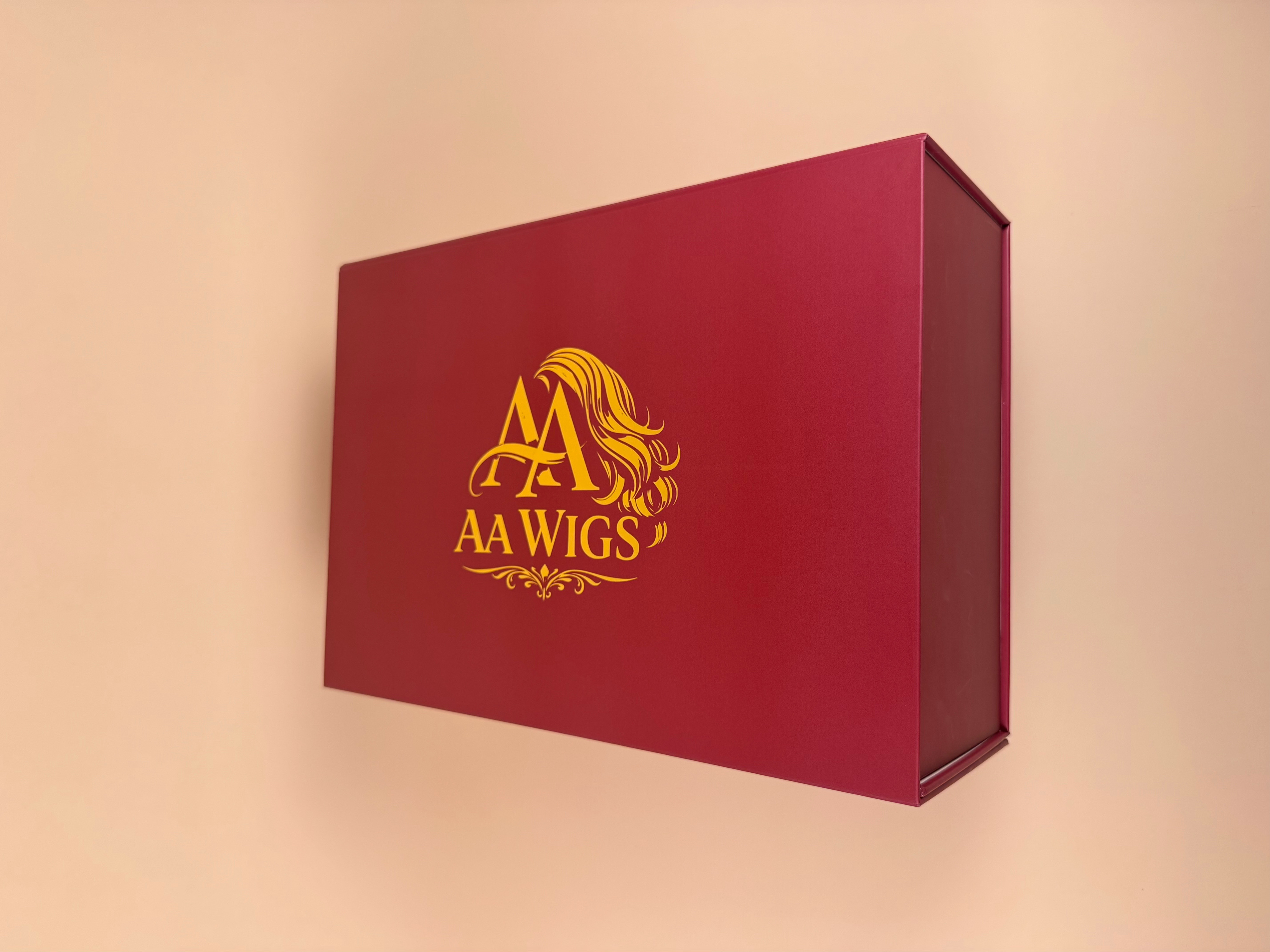
The AA WIGS Signature Box — deep burgundy, gold foil logo. The first thing a client sees when her order arrives.
The AA WIGS Signature Piece ships in a deep burgundy box with a gold foil logo and cream satin interior. Inside the box is a Signature Insert Card — not a promotional flyer, not a discount code for the next purchase — a card that says: you made the right decision. There is a Care Guide Card that tells you exactly how to protect what you just invested in.
The wig itself is placed in the box with the lace protected, the wave pattern supported, and the hair contained. It arrives looking like something was thought about. Because it was.
This is not described here to sell you something. It is described here because the standard exists — and because knowing that it exists changes what you should expect from any brand that claims to sell luxury.
Luxury is not a price point. It is a set of decisions made consistently about how a client is treated at every touchpoint — including the one that happens before she ever opens the box.
"What you receive in the mail tells you exactly how much the brand thought about you after you placed the order."
AA WIGS STANDARD
Every AA WIGS Signature Piece is prepared using a documented packaging process designed to:
- Protect the lace during transit
- Preserve the body wave pattern
- Present the wig in a structured Signature Box
- Include the AA WIGS Care Guide
- Deliver a consistent experience from shipment to unboxing
The Questions Worth Asking Before You Order
Before purchasing from any wig brand online, these questions will tell you more about the brand's standards than any product description.
- How is the wig packaged for shipping? Is there a structured box, or does it ship in a poly mailer?
- Is the lace protected during transit, or is it folded against itself inside a plastic bag?
- Was the wig inspected before shipping?
- Does the brand provide a care guide?
- Does the brand explain how to maintain the hair after purchase?
- Is there a clear return policy?
- Does the brand educate clients beyond selling the product?
- What is included in the package beyond the wig itself? A care guide suggests the brand cares about what happens after delivery.
The wig industry has normalised a low standard of delivery because most buyers do not know there is a higher one. Now you do.
Related Articles
Packaging is the final link in the quality chain — the one the client actually experiences first. To understand every step of the process that comes before it, from supplier selection through to the moment a unit is approved for shipment, read the complete What Happens Before An AA WIGS Unit Reaches You.
If you have questions about the Signature Piece or would like guidance on whether it is the right fit for you, the AA WIGS Concierge is available to help.